8 Contractor Marketing Fixes That Double Landing Page Conversions Overnight
Published on
Published by
Contents
Your landing page has 3 seconds to prove you're not just another contractor with a pickup truck and a business card.
Harsh? Maybe. But after analyzing hundreds of general contractor websites that convert visitors into $50K+ projects, I can tell you this - your prospects are making that judgment faster than you think.
The good news?
In this post, we'll walk through 8 proven elements that separate the contractors booking qualified projects from those finding tire kickers. These aren't theory—they're based on real landing pages generating 5-10 qualified project inquiries daily.
Why Does Conversion Rate Optimization Matter for Contractors?
In a nutshell, conversion rate optimization means the likelihood of someone converting on your page. In most cases, contractors operate in a limited area where competition is high (which is reflected in the CPC), and in most cases their landing pages are terribly optimized. The end result? They struggle to get traction with Google Ads.
Conversion rate optimization is more than making changes to your landing page. It's about understanding the psychological triggers that lead property owners to book project inquiries with you versus other contractors.
The Impact of Landing Page Conversion Rate on Your Bottom Line
Let's say you're offering a service priced at $15,000, with 40% profit margins netting you $6,000 per job. In competitive contractor markets, you're paying around $50 per click through Google Ads for contractors. At the industry average of 1.5% conversion (turning just 1 visitor out of 67 into a lead), each lead costs you $3,350 to generate. With profit margins at $6,000, you're still making $2,650 per converted lead - but those margins are dangerously thin.
Here's where it gets critical.
If your conversion rate drops to just 1.2% (1 in 83 visitors), your cost per lead jumps to $4,150. Now you're only making $1,850 per job. Drop to 0.9% conversion? Your cost per lead hits $5,556 - nearly wiping out your entire profit margin.
But optimize your landing page to hit 4% conversion rates, and suddenly your cost per lead plummets to $1,250 - you're making $4,750 per job. Hit 7% conversion rates and your construction marketing ROI explodes with leads costing just $714 each, creating a massive competitive moat against other contractors.
The baseline for successful contractor marketing? Target 4% minimum conversion rates, but push for 8-12% to really dominate. Contractors consistently hitting 8-10% conversion rates essentially unlock unlimited scalability - they can outbid competitors on Google Ads while maintaining healthy margins that others can't match.
The Role of Data in Your Contractor Marketing Strategy
Improved conversion rates feed your bidding algorithms with crucial data. Google's automated bidding systems learn from every phone call, form submission, and chat interaction to refine targeting and bid strategies. More conversions from your landing page mean smarter algorithm decisions, which creates a compounding effect that boosts your entire contractor marketing performance.
For optimal results, Google's algorithm typically requires around 20-30 conversions monthly to effectively optimize. Fall below this threshold and your campaigns struggle to gain momentum - the system lacks sufficient data to maintain stable performance and cost-efficiency. That's where we're here to help!
Key Elements of a High-Converting Contractor Landing Page
Before diving into specific fixes, understand this: contractor landing pages that convert at 8-10% don't happen by accident. They're built with deliberate psychological triggers and trust signals that guide visitors toward taking action. The contractors booking 5-10 qualified project inquiries daily from their landing pages understand something crucial - every element either builds confidence or creates doubt. There's no neutral ground when someone's deciding who to trust with their +$20,000 renovation or $200,000 commercial project.
What follows are 8 proven elements that transform average contractor landing pages into conversion machines. Each fix addresses a specific psychological barrier that stops prospects from reaching out. Master these, and watch your Google Ads for contractors finally deliver the ROI they promise.
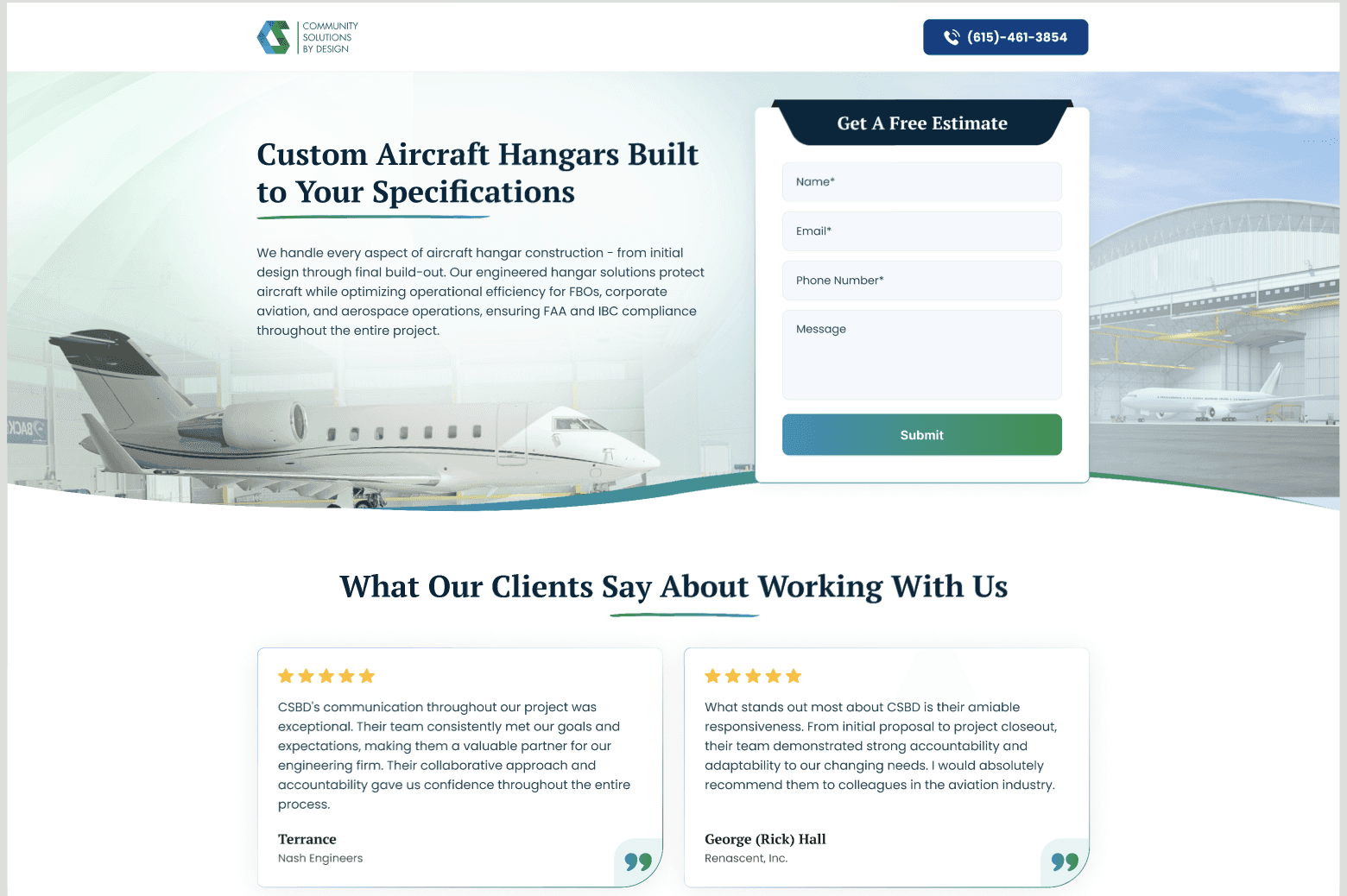
Most contractors send their paid traffic straight to their homepage. While this may seem like common sense, it's actually one of the biggest mistakes you can make. Your homepage has too many navigation items, too many call to actions, and a bunch of information that is not relevant to the user's needs. When someone clicks your Google Ad for "bathroom remodeling," they don't want to wade through your company history and 15 other services. The goal here is to convert.
Solution: Build a dedicated landing page separate from your main website. Strip out the navigation menu. Remove footer links. Delete anything that doesn't drive toward one action: getting that visitor to call or submit a project inquiry. A focused landing page without escape routes will double your conversions compared to dumping traffic on your homepage.
Fix #2: Put Your Phone Number Where Thumbs Can Reach It
For contractors, phone calls are gold. Property owners with serious projects want to talk to a human, not fill out another web form. Yet most contractor landing pages hide their phone number in tiny text at the bottom of the page. Worse, on mobile devices (where 60% of your traffic comes from), that number isn't even clickable.
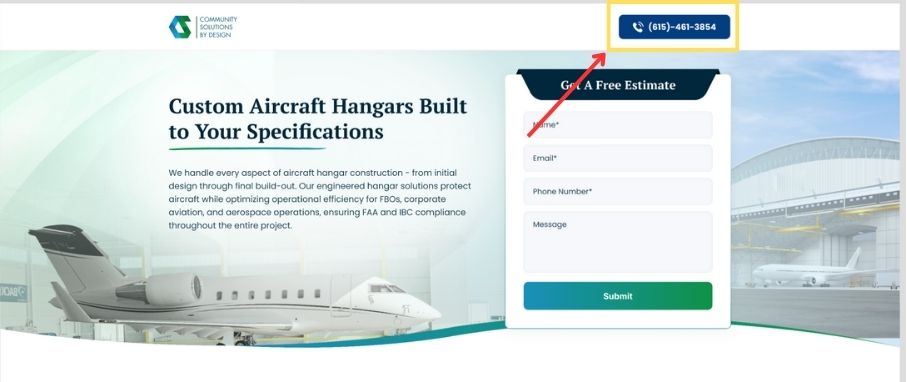
Solution: Place your phone number prominently at the top of your landing page. Make it impossible to miss - large font, contrasting color, and for mobile users, make sure it's clickable. Add text like "Call Now for Free Estimate" to encourage immediate action.
Fix #3: Write Compelling Headlines
Your headline is the first thing visitors see - and it better match what they clicked on. If your Google Ad promised "Schedule Free Consultation - Custom Spaces Designed For You," but your headline says "Welcome to ABC Architects," you've already lost them. Beyond matching your ad, your headline needs to instantly communicate why you're different from your competitors as well as grab their attention and convey the unique value of your service.
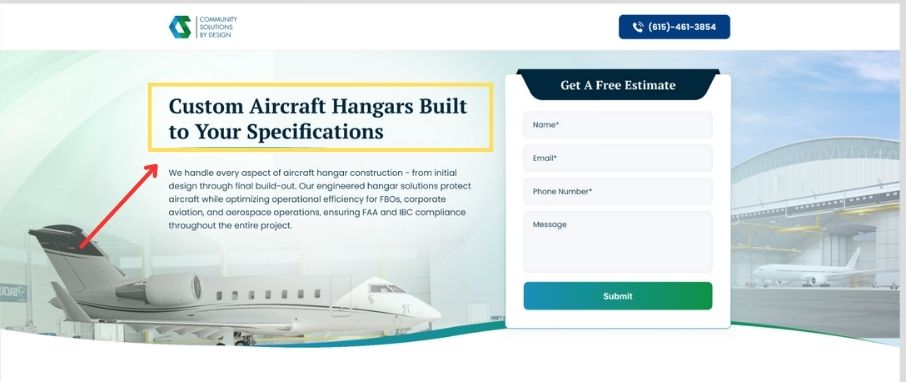
Solution: Your headline should not only communicate what the service is, but should explain your unique value proposition. Skip generic statements like "Aviation Architecture Services" and get specific about what makes you the obvious choice like "Custom Aircraft Hangars Built to Your Specifications". This gives visitors a concrete reason to choose you over competitors who make vague quality claims.
Fix #4: Use a Subheadline That Reinforces the Benefits
Your headline grabbed their attention. Now your subheadline needs to seal the deal by addressing their biggest concerns. For contractors, that's usually about timeline, budget, or quality concerns. Don't waste this space repeating your headline - add new information that pushes them closer to calling.
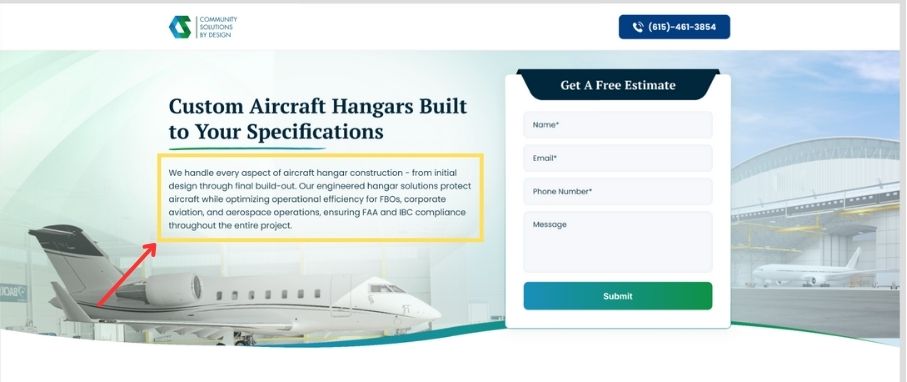
Solution: Your subheadline should be concise yet packed with benefits. The subheadline should tell visitors exactly what they'll get - whether it's warranty length, completion timeframe, or special guarantees. This kind of messaging not only reinforces the headline but also provides additional reasons for visitors to choose your service.
Fix #5: Make Your Call-to-Action (CTA) Button Impossible to Ignore
Your visitors came to your landing page ready to take action. Don't make them hunt for how to do it. Too many contractor landing pages hide their call-to-action (CTA) button in a sea of text or push it below the fold where mobile users never scroll. Worse, they use weak language that doesn't inspire action.
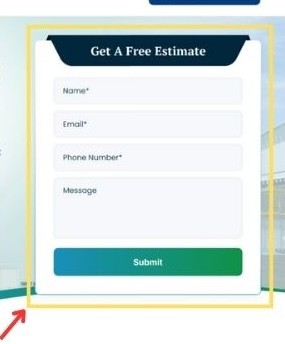
Solution: Make your CTA button stand out with contrasting colors and place it prominently above the fold. It should be clear about what the user can expect, using action-oriented language like: "Get My Free Estimate," "Book Your Consultation Today," or "See Pricing & Availability." The key is making it crystal clear what happens next and why it benefits them to click right now.
Fix #6: Offer Something Tangible in Exchange for Contact Information
Most visitors aren't ready to hire a contractor on their first visit. They're comparing options, gathering quotes, and doing research. If you only give them a "Contact Us" form, you'll lose 80% - 90% of these potential prospects. If you provide something of value first, you significantly increase the likelihood of conversions. These are called lead magnets, and they allow you to capture customer details and stay in touch with them.
Solution: Create a lead magnet that actually helps your prospects. For contractors, this could be a "Home Renovation Cost Calculator," or a "Construction Timeline Template," as an example. Make it genuinely useful - something they'd want even if they don't hire you. This positions you as helpful rather than pushy, and gives you permission to follow up when they're ready to move forward.
Fix #7: Show Real Projects, Not Stock Photos
Visual elements can significantly enhance the persuasiveness of your landing page. Stock photos of generic construction sites or smiling workers in hard hats don't build trust - they scream "template website." Visitors want proof you can deliver on your promises.
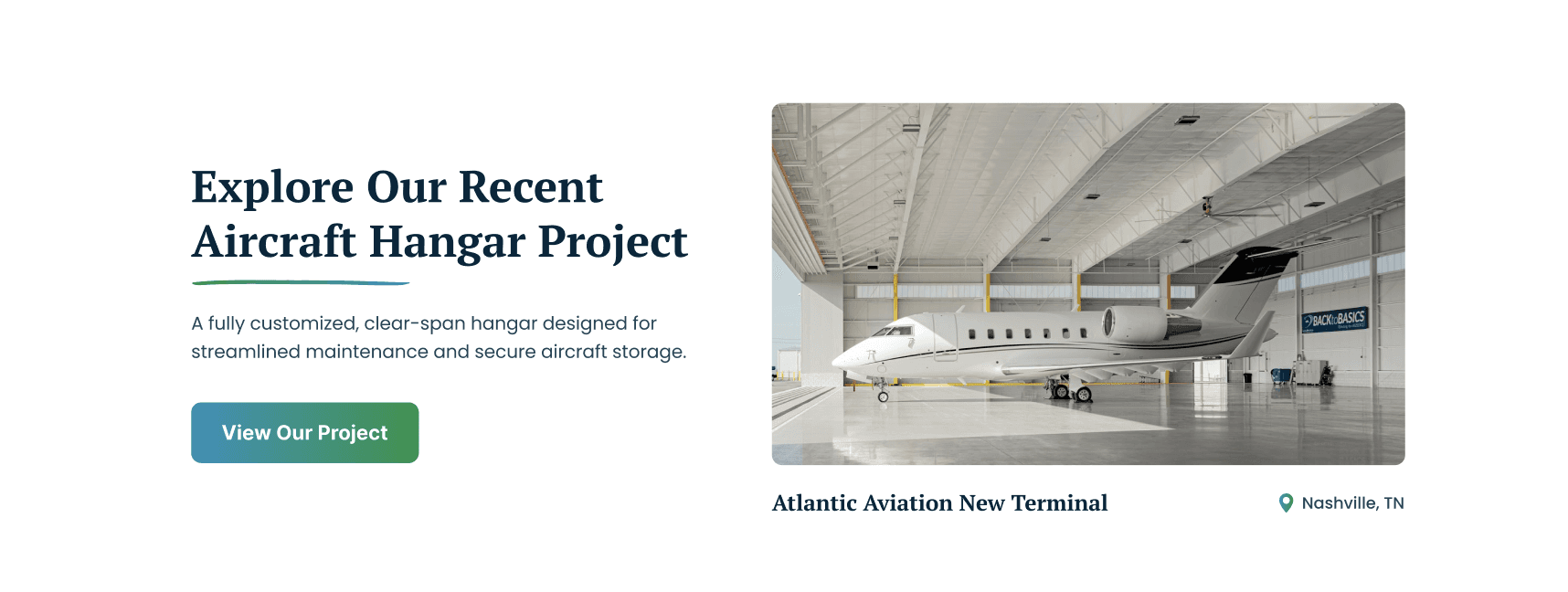
Solution: Show real project photos, before-and-after transformations, or time-lapse videos of your work. Include specific details like project location, timeline, and scope. For contractors, a 30-second video walkthrough of a completed renovation or a gallery of stamped concrete patterns you've actually installed beats any stock photo. These authentic visuals prove your capabilities and help prospects envision their completed project.
Fix #8: Display Trust Badges That Actually Matter
Prospects don't trust contractors they've never heard of. They're about to invest tens of thousands of dollars - they need proof you're legitimate and deliver quality work. Yet most contractor landing pages either skip social proof entirely or slap on meaningless badges no one recognizes.
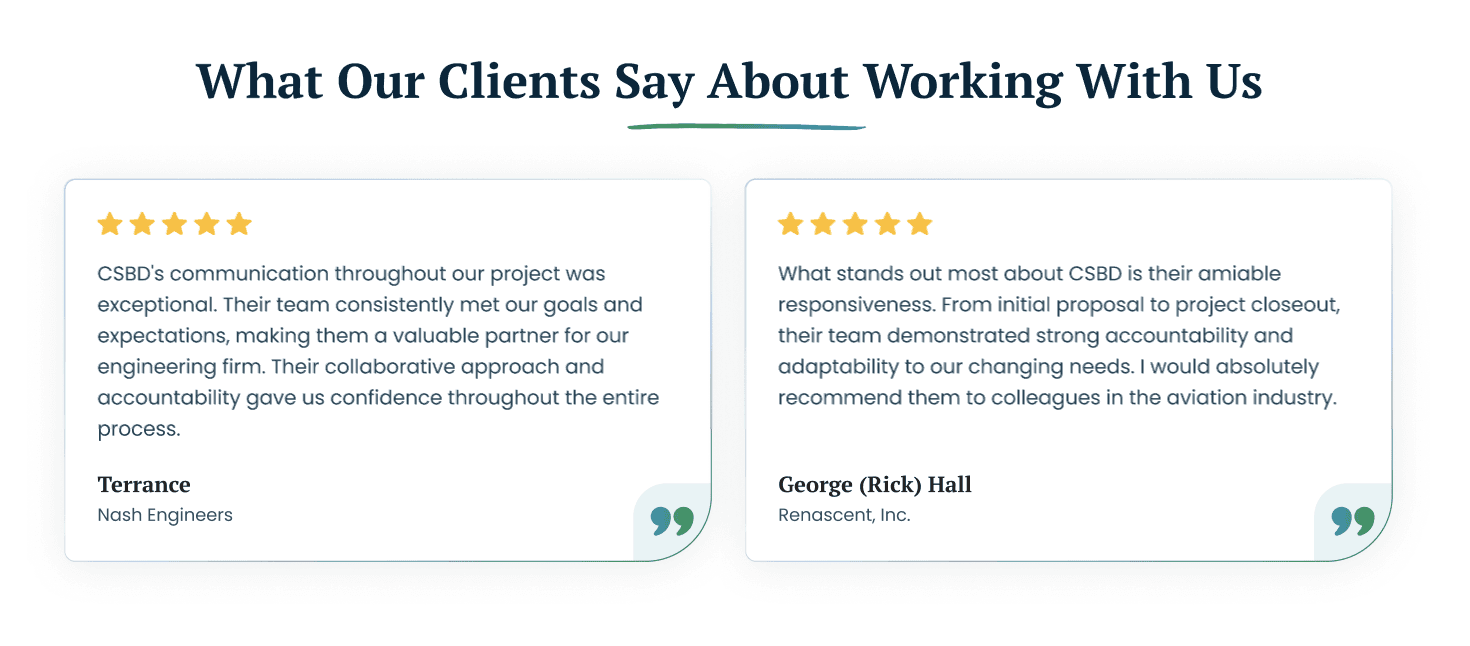
Solution: Feature real customer testimonials or trust badges prominently on your landing page. For testimonials, include full names and project details. Skip generic praise - showcase specific wins. For trust badges, display your Better Business Bureau rating, license numbers, insurance verification, and Google Reviews rating if strong. The goal is overwhelming evidence that you're the safe, reliable choice for their project.
Real-World Examples of High-Converting Contractor Landing Pages
To bring these concepts to life, let's look at a few examples of landing pages that have successfully implemented these strategies to achieve conversion rates of 10% or higher.
1. Roofing Contractor
Best Choice Roofing's landing page demonstrates how the 8 fixes work together to create high conversions. There's zero navigation to distract visitors - they can either call or fill out the form. The phone number jumps out in a bright red button at the top right, impossible to miss.
The headline doesn't waste time with company history - it goes straight for what matters: "GET 60% OFF YOUR ROOF INSTALLATION." The supporting benefits (0% financing, $200 gift card) address the two biggest concerns: affordability and immediate value.
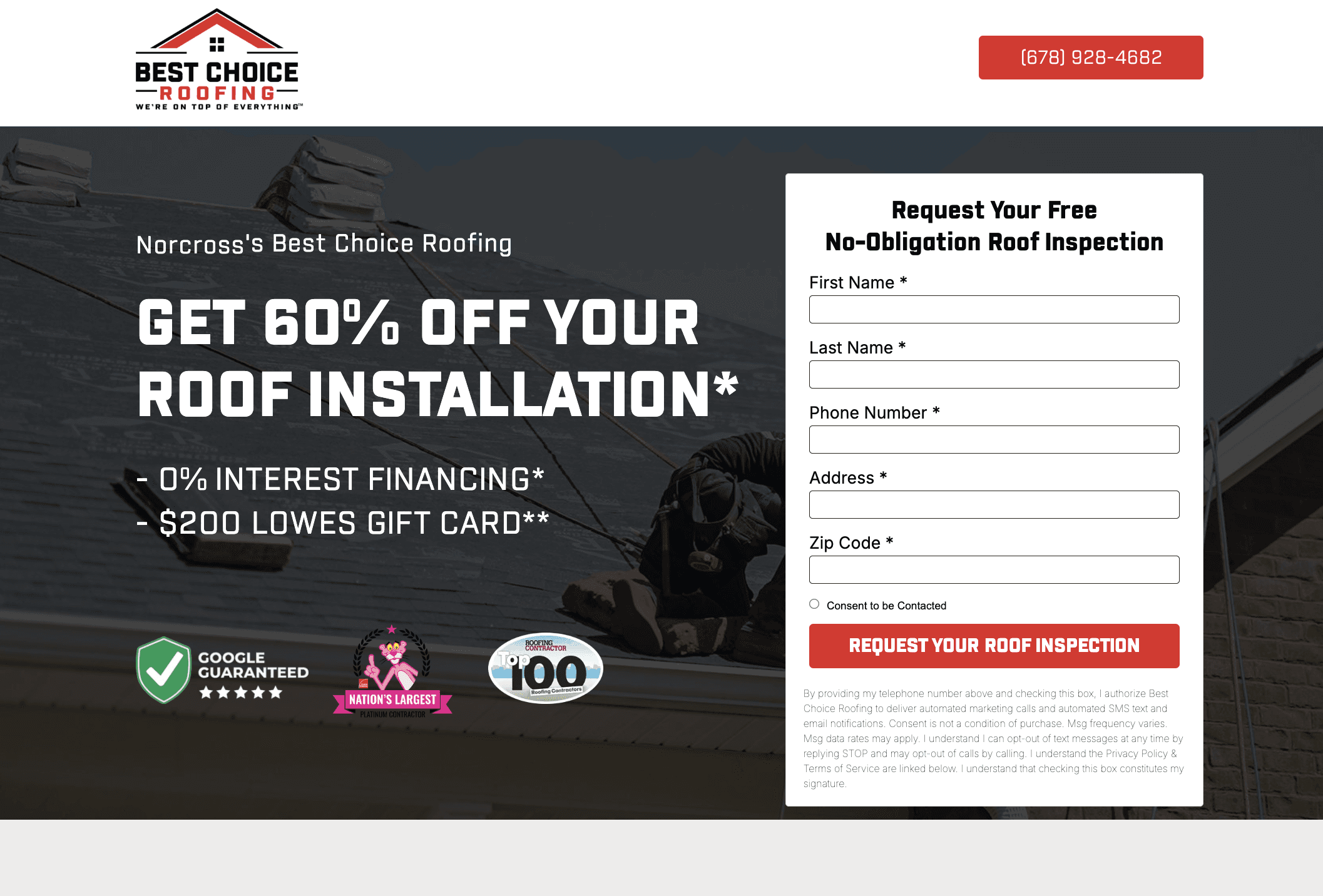
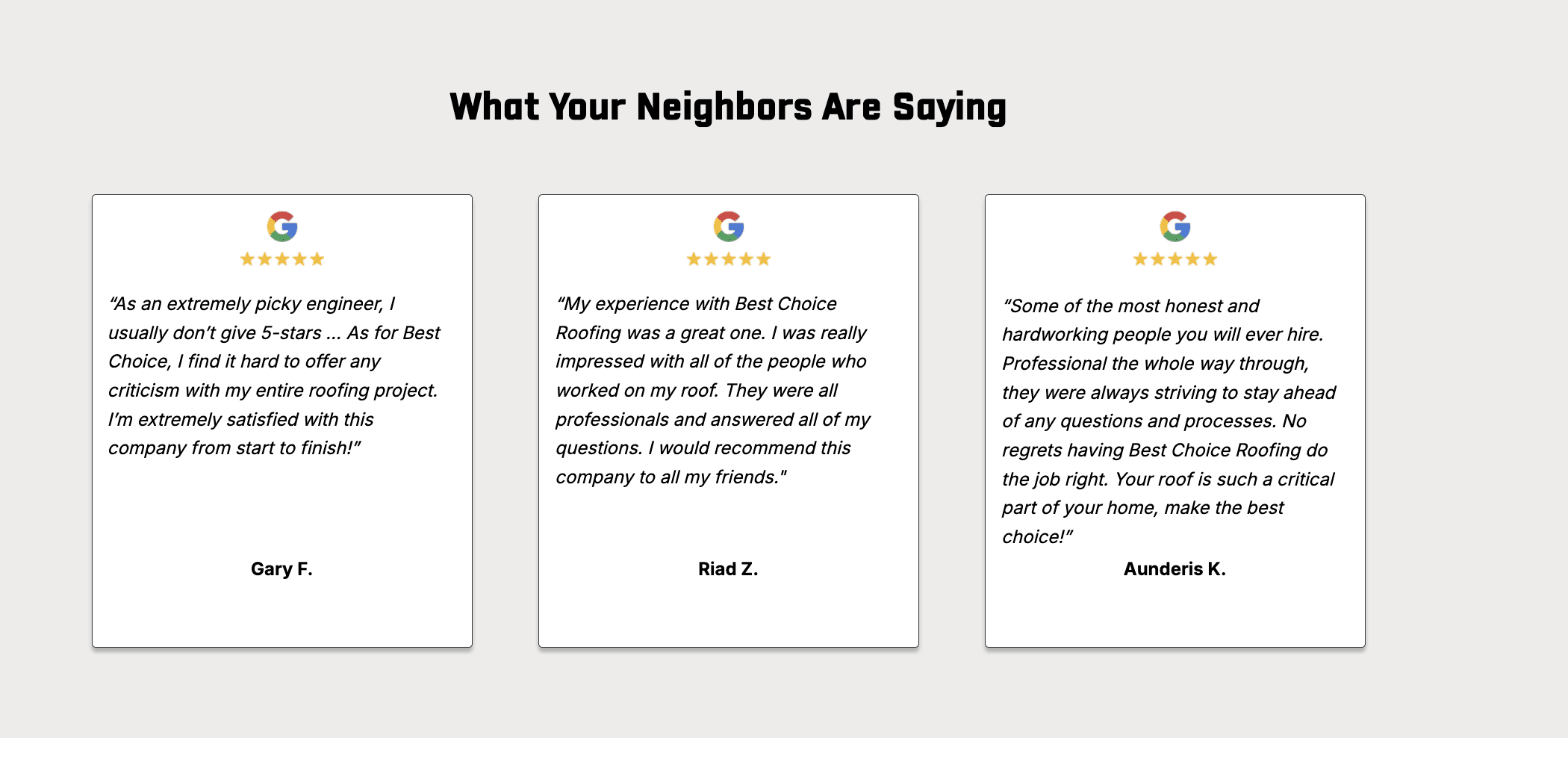
Trust signals are strategically placed - Google Guaranteed badge, 5-star rating, "Nation's Largest" claim, and industry recognition. These aren't random certifications; they're specific proof points that matter to homeowners making a major investment. In addition to that, we can see some Google reviews when we scroll down more.
The form asks for just enough information to qualify the lead without being overwhelming. The CTA button "REQUEST YOUR ROOF INSPECTION" tells visitors exactly what happens next - no surprises, no pressure, just a free inspection to get started.
Final Thoughts
When it comes to contractor marketing and conversion rate optimization, success lies in understanding the fundamental principles we've explored. Every element on your landing page either builds trust or creates doubt - there's no middle ground when prospects are evaluating contractors for their projects.
The strategies we've outlined work because they address the core psychological barriers that prevent visitors from converting. Remember these essential points:
Match your landing page to your marketing message
Eliminate friction in the conversion process
Provide clear value at every step
Begin with foundational changes: create dedicated landing pages for each campaign and ensure your phone number is prominently displayed. Focus on crafting headlines that speak directly to your prospects' needs, supported by subheadlines that reinforce your value proposition. Make your call-to-action (CTA) buttons stand out with action-oriented language that tells visitors exactly what to expect.
The addition of authentic visual content - real project photos, before-and-after galleries, video walkthroughs - transforms abstract promises into tangible proof. Combined with strategic placement of testimonials and relevant trust badges, these elements create the credibility necessary for high-value conversions.
These aren't just theoretical concepts - they're proven methods that successful contractors use daily to convert more of their landing page visitors into qualified leads. The difference between struggling with poor conversion rates and achieving strong results isn't luck or budget - it's deliberate optimization based on visitor psychology and industry best practices.
Take time to evaluate your existing landing pages against these 8 fixes. Even implementing half of these changes can dramatically improve your contractor marketing performance and return on ad spend.
Get Weekly Marketing Tips
Join other AEC professionals to get the best marketing tips every week in your inbox